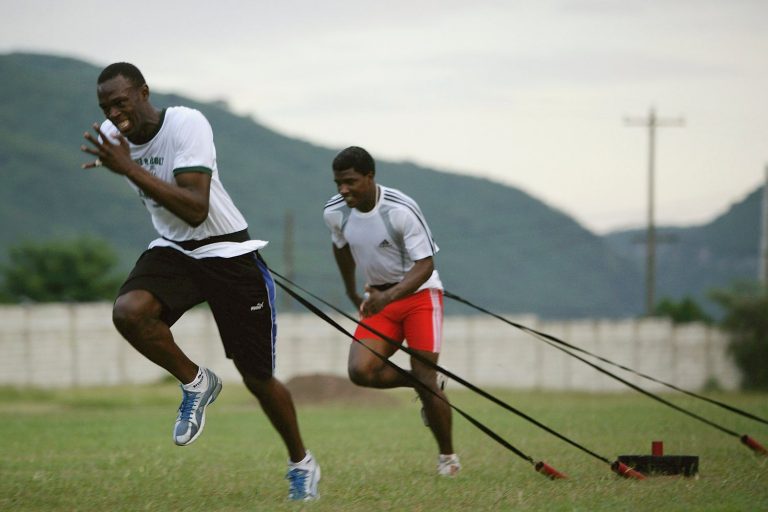

All around the world, adolescent athletes (spurred on by well-meaning coaches and parents) are honing their skills in the hope of becoming the next great professional sports star! But what are the consequences of early specialization on injury risk? And, does early exposure and specialization in a single sport as an adolescent improve the likelihood of long-term elite success as an adult?
Who is a “Specialized” Adolescent Athlete?
Recently NBA commissioner Adam Silver stated “we think some of the injuries that our young players are experiencing are overuse injuries, not because they’re being too physical, but it’s from the repetition of certain things. And that’s why I think (NBA players from the 1980s and 90s), those players in the league also happened to be the best in every other sport in their schools (as children) because they played different sports depending on the season.”
“Specialization” refers to athletes who have intentional and focused participation in a single sport for the majority of the year – that restricts opportunities for engagement in other sports and activities [2]. A recent study estimated that ~30% of young athletes are highly specialized (i.e. they train and compete in a single sport for ≥8 months of the year) [6]. A common perception exists that specialization improves athletic performance and long-term athletic career prospects, although in reality, there is increased risk of injury and burnout in specialized athletes.
What is the Problem with Early Specialization and How Might it Impact Elite Athletic Success?
Overuse injuries comprise >50% of all injuries sustained by young athletes [7]. A high degree of specialization has been associated with greater overall injury risk, including overuse injuries [6]. In many sports, adolescent athletes are progressing from youth competitions (e.g. Amateur Athletic Union [AAU] tournaments) to the professional level with extremely high competition workloads but relatively low training histories. This suggest that over-competing rather than over-training leads to increased injury risk. For example, a recent study showed a 32% higher match volume in youth rugby players who sustained injury than those who did not [5], with every 1 hour increase in match volume increasing injury risk by 41%. Importantly, no differences in training volumes were found between injured and non-injured players. These findings suggest that a high competition-to-training ratio might increase injury risk. Although competition-to-training ratios have received very little research attention, it is generally recommended that youth progress from a competition-to-training ratio of 25:75 during early adolescence to a 50:50 ratio in late adolescence [1].
Early specialization can create several potential problems:
- By over-competing and focusing solely on sport-specific practice, players neglect structured strength and conditioning, resulting in being under-prepared for the physical demands of competition,
- Due to the repetitive nature of sport-specific movements, players lack the movement diversity and skills to solve unpredictable movement challenges,
- Exposure to the same repetitive sport-specific movements increases the risk of overuse injury,
- A high incidence of injury in the formative years may increase risk of injury as an adult competitor.
Clearly, providing structured strength and conditioning programs (which have been shown to reduce injury risk), and managing competition workloads through the “riskier” formative years, could prove critical in reducing the injury toll on younger players, and setting appropriate foundations for adult sporting success.
What Additional Factors Warrant Consideration When Managing Adolescent Athletes?
When considering the potential adverse effects of specialization and heavy workloads, it is important to recognize that:
- Tolerance to heavy workloads is influenced by the age (i.e. chronological, biological, and training age) of the player;
- Workloads affect individual tissue types (i.e. joint vs. bone vs. tendon vs. muscle) in different ways.
Age is an independent risk factor for injury, with older players tending to be at greater risk (because age is associated with exposure, which in turn is associated with injuries). However, young age can also contribute to injury. For example, in a 14-year study of elite cricket players, younger players (< 22 years old) were up to 6.7 times more likely to sustain a bone stress-related injury [3]. But by the age of 22-25 years, the risk of bone-stress injury was 3.8 times lower than in the rookie years! Muscle and joint injuries tend to follow a “U-shape” – the greatest risk is when players are at the beginning and end of their careers.
How Do We Ensure Adolescent Athletes Become Adult Competitors?
There is limited evidence that early specialization leads to elite adult performance [8]. A recent study showed that extensive multidisciplinary practice (i.e. “sport sampling”) in the developmental athlete was better associated with adult world class performance than intensive discipline-specific practice [4] (Figure 1). So how can we give adolescent athletes the best chance of becoming elite athletes?

1. Implement a structured strength and conditioning program and teach adolescent athletes how to train. This involves developing a consistent routine on how to physically and mentally prepare for training (e.g. packing training gear early, fueling and hydrating well, physically preparing before training) as much as “winning” the actual training session. Along with documented injury reduction benefits, well-developed physical qualities underpin skillful performance. It promotes resilience, faster recovery, and a better ability to execute sporting skills at a high level.
2. Sample a variety of sports. Solving the early specialization challenge is not as simple as saying “don’t specialize”, as clearly there will be some sports where early specialization may be beneficial to long-term success (e.g. gymnastics). But if your adolescent athlete has to specialize, then encourage sampling of other sports and activities. This will foster the development of flexible and adaptable movement skills, and in some sports, may even result in superior perceptual expertise (i.e. decision-making ability).
3. Set realistic expectations. Elite athletes are called “elite” for a reason – it’s because they are rare! Many adolescent athletes dream of playing professional sport, but the reality is that not all can make it. For parents and coaches – remember, in terms of world-class performance, there is no such thing as an elite 10-year-old! Setting realistic goals and having a wide range of interests can help adolescents if the sporting dream doesn’t come to fruition.
Check out my Live Courses – coming to the U.S. and Europe this Spring!
References
1. Balyi I, Way R, Higgs C. (2013). Long-term athlete development. Human Kinetics.
2. Bell DR, Snedden TR, Biese KM, Nelson E, Watson AM, Brooks A, McGuine TA, Brown RL, Kliethermes SA. (2021). Consensus definition of sport specialization in youth athletes using a Delphi approach. Journal of Athletic Training, 56:1239-1251.
3. Blanch P, Orchard J, Kountouris A, Sims K, and Beakley D. (2015). Different tissue type categories of overuse injuries to cricket fast bowlers have different severity and incidence which varies with age. South African Journal of Sports Medicine, 27:108-113.
4. Güllich A, Barth M, Hambrick DZ, and Macnamara BN. (2025). Recent discoveries on the acquisition of the highest levels of human performance. Science, Dec 18;390(6779):eadt7790. doi: 10.1126/science.adt7790.
5. Hartwig TB, Gabbett TJ, Naughton G, Duncan C, Harries S, and Perry N. (2019). Training and match volume and injury in adolescents playing multiple contact team sports: A prospective cohort study. Scandinavian Journal of Medicine and Science in Sports, 29:469-475.
6. Jayanthi NA, LaBella CR, Fischer D, Pasulka J, Dugas LR. (2015). Sports-specialized intensive training and the risk of injury in young athletes: a clinical case-control study. American Journal of Sports Medicine, 43:794-801.
7. Jayanthi N, Schley S, Cumming SP, Myer GD, Saffel H, Hartwig T, and Gabbett TJ. (2022). Developmental training model for the sport specialized youth athlete: a dynamic strategy for individualizing load-response during maturation. Sports Health, 14:142-153.
8. Kliethermes SA, Marshall SW, LaBella CR, Watson AM, Brenner JS, Nagle KB, Jayanthi N, Brooks MA, Tenforde AS, Herman DC, DiFiori JP, and Beutler AI. (2021). Defining a research agenda for youth sport specialization: the AMSSM youth early sport specialization summit. British Journal of Sports Medicine, 55:135-143.